


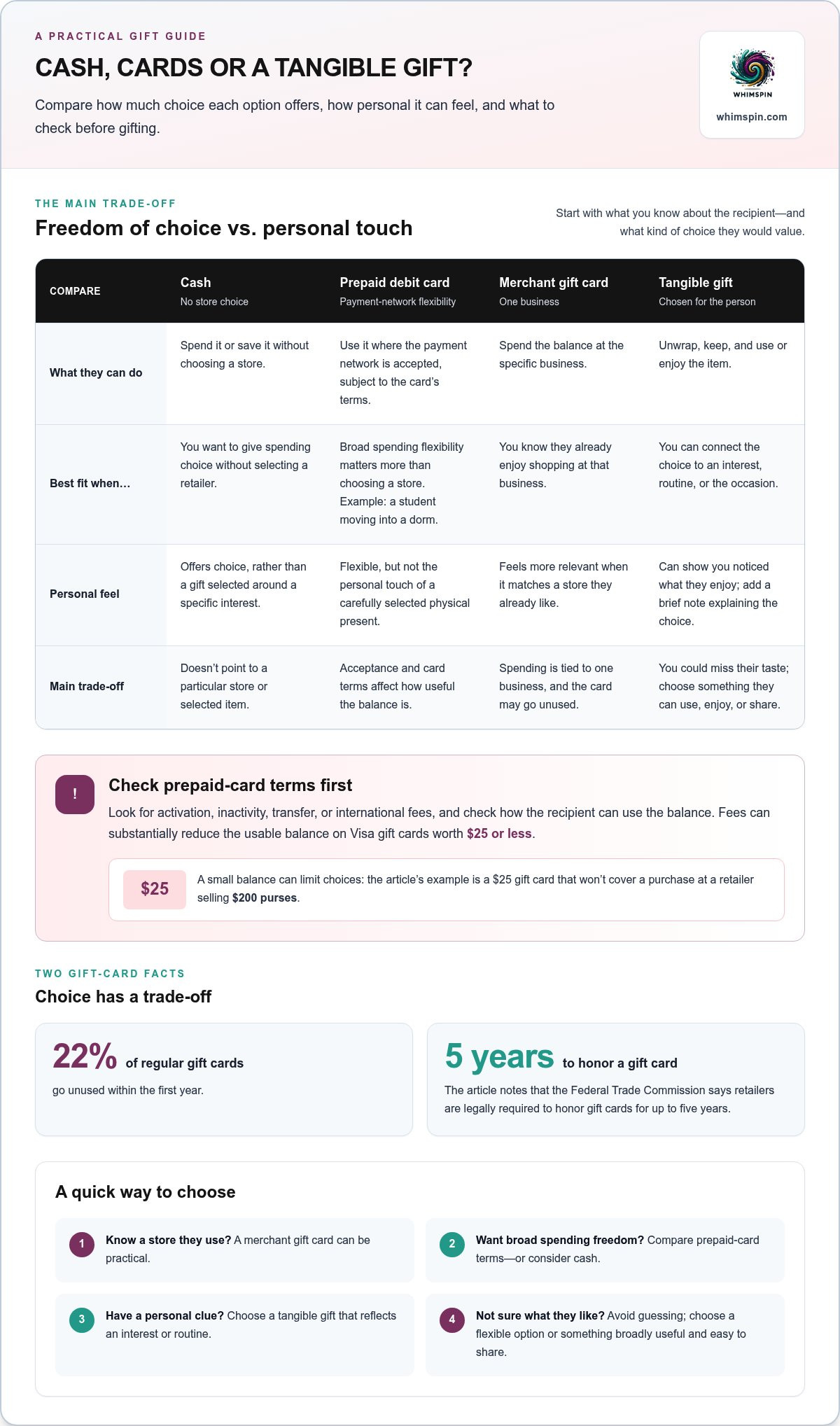
Twenty-two percent of regular gift cards go unused within the first year. If you’re weighing what to get instead of a gift card, choose something that fits how well you know the recipient, or consider a prepaid debit card when flexibility matters more than a personal touch. A little thought can turn an easy fallback into a gift that feels picked, not grabbed.
Gift cards are convenient, and sometimes that’s exactly what you need. But if you want the moment to feel more personal, the alternative doesn’t have to be expensive or elaborate. It just needs to show you’ve paid attention to who they are and what the occasion calls for.
This guide matches gift ideas to your relationship, from close friends and family to people you’re still getting to know. You’ll find ways to make a simple present feel more considered, along with guidance on when a prepaid debit card may be the smarter choice. No gift-giving gymnastics required.
Key Takeaways
- Match the gift’s tone to the occasion and choose a personal touch that fits how well you know the recipient.
- For an inexpensive present, look for simple ways to make a small gesture feel thoughtful rather than focusing on the price.
- Personalized gifts work best when they reflect the recipient’s interests, humor, or everyday style.
- Choose practical gifts by considering the recipient’s age, routines, and what they’ll genuinely use.
- When a playful graphic tee suits their personality, a distinctive design can make the gift feel more individual.
1. Choosing a gift based on how well you know the recipient
The best alternative depends on what you know about the person, not just the occasion. A close friend’s favorite snack, a sibling’s weekend hobby, or a coworker’s coffee ritual can point you toward a thoughtful choice. Start with one reliable clue: something they enjoy, use, collect, or talk about often.
For someone you know well, choose a gift that reflects a specific preference. If your friend loves hosting, pair a bottle of wine with complementary snacks. If they collect cookbooks, pick a title about a cuisine they enjoy. A gift tied to a real interest says, “I noticed,” without requiring a grand gesture.
For a new neighbor or a get-well visit, keep the message clear and the choice low-pressure. Match the gift’s tone to the occasion: a fruit basket can suit get-well wishes, while a gourmet basket can express thanks. A curated basket can also feel more personal than a gift card, even when both cost the same amount, such as $50.
When you know someone’s routines better than their preferences, make the routine the guide. A coffee fan might appreciate a small coffee-themed present; a book lover could enjoy a thoughtful bookmark paired with a title. For a caffeine enthusiast with a playful streak, a funny coffee graphic tee makes that daily ritual part of the gift.
If you’re choosing for someone you barely know, avoid guessing at personal tastes. Pick something broadly useful or easy to share, such as a snack assortment for a team or a simple plant for a host. A gift card still has a practical advantage: according to the Federal Trade Commission, retailers are legally required to honor gift cards for up to 5 years.
That flexibility matters when your knowledge is limited, but it isn’t the only consideration. Regular gift cards can go unused within the first year, and a physical gift can make the occasion feel more deliberate. Weigh what you know against the reason for giving: a thank-you calls for a different tone than a birthday surprise.
Before buying, use a quick three-step test. Name one interest or routine you’ve personally observed. Connect it to the occasion. Then ask whether the recipient can use, enjoy, or share the gift without extra effort. If you can’t identify a good match, choose a flexible option rather than turning a guess into clutter.
2. Prepaid debit cards as gift card alternatives
Cash, prepaid debit cards, and gift cards offer different kinds of choice. Cash can be spent or saved without choosing a store, while a merchant gift card directs spending to one business. A prepaid debit card typically uses a payment network, so its usefulness depends on where it’s accepted and on its terms.
Choose a prepaid card when you want to offer more flexibility than a store-specific balance. For example, a student moving into a dorm could use one for different everyday purchases. A gift card to a particular shop works better when you know the recipient already enjoys shopping there. Neither option carries the personal touch of a carefully selected physical present.
Read the card’s terms before buying. Look for any activation, inactivity, transfer, or international fees, and note how the recipient can use the balance. Those fees can substantially reduce the usable balance on Visa gift cards worth $25 or less. A small balance can also limit choices: a $25 gift card won’t cover a purchase at a retailer selling $200 purses.
Both options have advantages. A tangible gift can show you considered someone’s interests, and the recipient can unwrap and keep it. A card is compact, easy to send, and lets the recipient choose what to buy. The trade-off is straightforward: a physical gift might miss their taste, while a card can feel less personal or come with spending restrictions.
For last-minute gifting, choose something available nearby or deliverable instantly. A digital prepaid card can suit someone who values flexibility. If you know their habits, a favorite snack, a book, or a small plant can feel more personal without a lengthy hunt. Add a brief note explaining your choice, such as “For your balcony garden” or “For your next reading night.”
Before deciding, ask yourself three things: Do I know a store they use? Do they want broad spending freedom? Can I choose a tangible item that fits their interests? If the first answer is yes, a merchant card can be practical. If flexibility matters most, compare prepaid card terms. If you have a clear personal clue, follow it toward a thoughtful present.
Want an alternative with a little more personality than plastic? Explore playful gift ideas for a present that reflects someone’s sense of humor or interests.
3. What are inexpensive gift ideas instead of a gift card?
A small budget can still buy a gift with a personal angle. Start with a practical question: what does the recipient enjoy, use, or make time for? A movie fan might appreciate a themed movie night, while a gardener could enjoy seeds paired with a handwritten note. Choose one simple idea and present it with care, rather than adding random extras.
One option is bath salts made with Epsom salt and lavender essential oil. Package them in a clean container and add a note listing the ingredients, so the recipient knows what they’re receiving.
You could also make bath oil by combining lavender essential oil with a moisturizing oil such as safflower, sunflower, or jojoba. Keep the presentation simple: use a small bottle, list the ingredients on a tag, and wrap it with a towel or bar of soap. This works best when you know the person enjoys bath products. Otherwise, choose something they can readily use.
For a movie lover, choose four discounted DVDs with a theme, such as a genre or actor, and wrap them with a jar of popcorn. A set of favorite comedies, films featuring a familiar actor, or mysteries feels more deliberate than four unrelated discs. Add a short card suggesting a movie-night plan, and the gift becomes an invitation to relax, not just a stack of films.
Food can be an affordable choice, especially when the recipient has a known favorite. Assemble a few ingredients for a recipe they enjoy, or pair a favorite tea with a handwritten list of reading suggestions. A small homemade treat can thank a host; a ready-to-eat snack can help a friend facing a busy week. Choose something that suits their tastes and circumstances.
Presentation adds meaning without requiring an expensive upgrade. Reuse a clean box, wrap a book in brown paper, or attach a handwritten note explaining your choice. A movie-night bundle can include a simple schedule, while homemade bath salts can carry a tag listing the ingredients. Let the recipient’s interests guide the idea, then make the wrapping part of the thought, not an afterthought.
Before buying supplies, set a spending limit and choose one concept. Homemade bath products, a themed DVD bundle, or a favorite snack can each feel personal when connected to something you know about the recipient. Keep the contents useful, the presentation tidy, and the note specific. That’s how a modest present earns its place instead of becoming clutter.
4. What personalized gifts make good alternatives to gift cards?
A personalized gift doesn’t need a name engraved on it. It can reflect a shared memory, a favorite pastime, or a phrase only the two of you understand. For a friend who loves hiking, print a photo from a memorable trail and write the location and date on the back. That detail turns an ordinary picture into a reminder of a day you shared.
For someone who enjoys music, build a playlist around a specific occasion or chapter of your friendship. Add a short note explaining why you chose a few tracks, such as the song playing during a road trip. Keep the selection focused instead of adding every song you’ve ever liked. The personal connection is the point, not the playlist’s length.
A reader may appreciate a book chosen for their taste, with a note tucked inside the cover. Mention the character, idea, or conversation that made you think of them. If you’re unsure which titles they own, choose a reading accessory they’ll use, then personalize the card with a recommendation from your own shelf. A specific message can make a simple gift feel deliberate.
Shared history offers another easy route. Gather a few printed photos from a family gathering, college days, or a favorite trip, then arrange them in a small album. Add captions naming the people or places in each picture. For a relative who retells the same story every holiday, include a note inviting them to share it again over dinner.
For a home cook, write out a recipe connected to a meal you’ve shared. Include the dish’s name, where you first tried it together, and a tip you learned while making it. If you can cook the recipe, pair the handwritten instructions with a plan to make it together. The memory and shared activity personalize the gesture without elaborate packaging.
Match the personalization to your relationship. A close friend might enjoy an inside joke, while a newer colleague may prefer a warm note about a shared project. Keep jokes kind and avoid details that could embarrass the recipient in front of others. A useful test: would you feel comfortable explaining the reference if someone else opened the gift?
Before choosing, use three prompts: What do they enjoy? Which moment or detail connects you? Will the gift suit their taste and circumstances? A photo from a meaningful trip, a carefully chosen playlist, or a recipe with a story can answer those questions. The best personalized gifts make recipients feel recognized without asking them to act grateful for something they can’t use.
5. What practical gifts are better than gift cards for different ages?
A practical gift earns its place by fitting someone’s routine. Age can suggest a starting point, but interests and daily needs matter more than a birthday number. Think about what the recipient carries, uses, or regularly runs out of. A sturdy lunch container might suit a student, while a compact tool organizer could help someone who enjoys home projects.
For a young child, choose something that supports an activity they already enjoy. A picture book can encourage a shared bedtime routine, while washable art supplies give a budding artist materials for drawing. Consider the household, too: a large toy may be awkward in a small apartment, while a simple puzzle is easier to store and bring out again.
Teens often have strong preferences, so a practical gift doesn’t need to be plain. A reusable water bottle can suit someone who carries a backpack every day, while a phone stand may help with video calls or desk work. Choose colors or designs that match what they already use. If you don’t know their style, choose a neutral option that works in different settings.
For adults, start with a task or hobby they mention often. A home cook might appreciate a useful kitchen tool, while a commuter could use a compact umbrella or travel organizer. A reader who brings books on the train might find a protective book sleeve useful. The strongest choice solves a small, familiar problem without adding a complicated routine.
Older adults have varied routines, too, so avoid choosing by age alone. A large-print puzzle book can suit someone who enjoys crosswords, while a lightweight tote may help with library visits or errands. If the recipient already owns several versions of an item, choose something that complements their habits. A favorite pastime is a better guide than a broad age label.
Use a quick check before you buy: name the activity, identify the practical need, then consider storage and portability. A student’s lunch container should fit their bag; a puzzle book should match their preferred challenge; a cook’s tool should suit the meals they make. This keeps “useful” from becoming code for another object left untouched in a drawer.
Practical gifts can still show personality. Pair a notebook with a pen for someone who likes taking notes, or wrap a travel organizer with a short message about their next trip. The item handles a real task; the presentation connects it to the recipient. That balance makes usefulness feel thoughtful, not purely functional.
WhimSpin: Pale by Nature Lobster by Accident T-Shirt
WhimSpin offers the Pale by Nature Lobster by Accident T-Shirt for someone who enjoys an unexpected punchline and a little seaside absurdity. A graphic tee can be a memorable alternative to a gift card when the recipient’s humor or interests give you a clear direction.
For a dinosaur fan with a playful streak, the Surfing T-Rex T-Shirt brings prehistoric chaos to the waves. The Shark & Flamingo Floatie T-Shirt adds another delightfully oddball option, while Party Like It’s 1776 T-Shirt suits someone who likes a historical reference with a wink. Choose the design that feels most like them, rather than guessing at a generic present.
If one of these tees sounds right for someone on your list, visit whimspin.com.
Make your next gift feel unmistakably theirs
Before deciding what to get instead of a gift card, picture the recipient opening the gift. What would make them smile, laugh, or think of a favorite part of their life? That mental snapshot can help you move past generic choices toward a gift with a point of view.
Then make the decision simple. Pick one detail you know about them, connect it to the occasion, and choose a present that feels right for both. If you’re still torn between two ideas, go with the one that feels most like the person, not the one that seems safest. A little specificity can make a gift memorable.
Contact WhimSpin for gift ideas Trust what you’ve noticed about them. A thoughtful choice can turn an ordinary occasion into a bright little story.
Frequently Asked Questions
What Should You Send Instead of a Gift Card?
Choose something linked to a detail you know about the recipient, such as a favorite activity or familiar routine. If you’re deciding what to get instead of a gift card, consider what they’d enjoy using, sharing, or doing. A birdwatcher might appreciate a field notebook for sightings, while someone who enjoys puzzles could like a puzzle book. Add a short note explaining the connection.
So, What Should You Actually Send?
Choose an option that suits your relationship and the occasion. For a close friend, an invitation to an event you can enjoy together may create a shared memory. For a coworker you don’t know well, a useful desk accessory may feel more appropriate. Write down two ideas, compare how personal and practical each feels, then choose the one that fits the recipient.
Why look for an alternative to Visa gift cards?
A Visa gift card may be less convenient if its terms or remaining balance complicate a purchase. For example, the recipient might need another payment method if the total exceeds the card balance. Before choosing one, consider whether they prefer flexible spending or would appreciate a specific, tangible gift. A handwritten card paired with a useful item can make the gesture feel more personal.
What are thoughtful alternatives to giving a gift card?
Thoughtful alternatives include a shared activity, an object connected to someone’s hobby, or a small item that marks a meaningful moment. For a friend who enjoys sketching, drawing pencils can support a pastime they already have. For a family member celebrating a milestone, a framed photograph from the occasion can become a keepsake. The personal connection makes the choice feel intentional.
How can you choose a gift based on someone's interests?
Notice what they mention repeatedly, keep nearby, or make time for. Then connect one observed interest to something they can use. If someone often sketches during lunch, for example, a pocket-size sketchbook may suit them better than general art supplies. Think about their habits rather than assuming every fan wants more merchandise tied to a favorite show, team, or hobby.
What gifts can you give when you don't know someone's preferences?
Choose a low-commitment gift that doesn’t depend on knowing someone’s clothing size, favorite scent, or food preferences. A notebook and pens can suit a new colleague, while a neutral desk organizer may work for someone setting up a workspace. Keep the presentation modest and include a warm note. Avoid specific jokes or décor choices when you haven’t learned their tastes yet.


