


A rainbow can say “Pride,” but a specific flag can make the message more personal. Pride flag graphic tees feature the colors and symbols associated with particular LGBTQ+ identities, while other Pride shirts may use broader rainbow imagery, slogans, or celebratory art. Both can show support; the difference is how specifically the design speaks.
It makes sense to want a shirt that feels like you, not a one-size-fits-all rainbow. A flag design can help signal an identity, recognize a community, or show solidarity, while a broader Pride graphic can make a joyful statement without pointing to one identity in particular.
Here, you’ll learn what different flag designs communicate, how they compare with other Pride-shirt styles, and what inclusive sizing and cuts mean when choosing a tee. We’ll also cover practical details such as printing and care, so you can find a shirt that suits your message and personal style.
Key Takeaways
- Choose a flag design when you want the shirt to signal a particular LGBTQ+ identity or community; consider broader Pride artwork for a more general message.
- Look beyond the graphic: compare the available cut and sizing details with how you want the tee to fit.
- Learn how lesbian, bisexual, transgender, nonbinary, asexual, and other identity flags can appear in shirt designs.
- Check the print and care guidance to help keep a graphic tee looking its best through regular wear.
- Explore how different Pride-shirt designs can express identity, solidarity, or celebration in everyday settings.
Looking for More Pride T-Shirts?
A Pride shirt can make support visible on a grocery run, at work, or beside friends at a parade. An Amazon search for Pride flag T-shirts returns over 70,000 results, so the choices stretch well beyond one rainbow graphic. That variety lets you choose a design for your identity, your support, or the mood you want to wear. A small flag detail can feel personal; a bright, bold print can invite conversation.
Visibility means different things to different people. Someone might wear a bisexual flag heart to feel recognized, while an ally might choose a design that signals support. Neither shirt speaks for everyone who wears it. You decide what you want to share and how much. A shirt can spark a friendly conversation, help someone spot a potential ally, or bring a familiar symbol into an ordinary day.
Think about the setting before choosing the graphic. At a Pride parade or festival, a large, colorful design can stand out in a crowd. At a family gathering or a casual coffee shop, a smaller symbol may feel more like your everyday style. For allies seeking a quieter signal, a subtle ally-flag heart design offers another way to show support without making the shirt’s message the whole outfit.
Everyday wear makes it easy to reach for a tee again. Pair a flag design with jeans for errands, layer it under an open shirt for a more understated look, or add a jacket when the weather changes. For a Pride event, the same tee works with comfortable shoes and a light layer. Choose a design you’ll enjoy wearing beyond the event, not just one that suits a single day.
Before choosing a shirt, decide what you want its visibility to convey. These prompts can help:
- Identity: Choose a flag connected to the community you want to represent.
- Allyship: Look for a design that communicates support clearly and comfortably.
- Style: Consider whether a small emblem or a larger graphic suits your usual outfits.
- Setting: Picture wearing it at a parade, on a weekend walk, or with friends.
A Pride shirt can be celebratory without making a statement on behalf of every wearer. Some people welcome questions; others prefer a design that feels personal. Respect that difference when complimenting someone’s shirt or starting a conversation. The right choice fits your message, style, and plans, whether you’re heading to a Pride gathering or going about an ordinary day.
Inclusive sizing and gender-neutral cuts
A flag design feels more wearable when the shirt’s fit suits your body and preferences. Unisex sizing is used for the collection’s T-shirts, offering a shared sizing framework rather than separate men’s and women’s labels. That label alone doesn’t tell you how a tee will sit on your shoulders, chest, or hips. Compare the garment measurements, when provided, with a shirt you already like wearing.
Start with the fit you want, not just the letter on the tag. Lay a familiar tee flat and compare its width and length with the new shirt’s size chart. A relaxed favorite is a useful reference if you want a similar fit; a closer-fitting tee gives you another point of comparison. If you’re between sizes, consider whether you prefer extra room to move or a neater outline under a jacket.
“Gender-neutral” describes an approach to labeling and styling, not a universal body shape. A unisex tee may suit someone who dislikes gendered categories, someone shopping for a partner, or anyone who prefers that cut. It won’t fit every wearer the same way. Shoulder width, torso length, and personal comfort all affect the fit, so use the garment measurements instead of relying on assumptions about a size label.
Use a simple fit checklist before choosing:
- Shoulders: Compare the seam placement on a favorite tee with the listed garment measurements.
- Length: Consider where you want the hem to land when standing or reaching.
- Room: Decide whether you want space for layering or a closer everyday fit.
- Graphic placement: Picture how the flag heart or emblem will sit across the shirt when worn.
A nonbinary pride heart tee is one example of a design labeled unisex. The identity represented by its graphic and the shirt’s cut are separate choices: one communicates a message, while the other shapes the silhouette. Keep both in mind when selecting a tee for a Pride gathering, a casual outfit, or regular rotation.
Fit preferences can vary with the occasion. A roomier tee may feel comfortable for walking around a festival, while a closer fit can work under an open overshirt. Neither is more authentic. Choose a size and cut that let you move comfortably and wear the design with confidence, whether you’re styling a bold flag or keeping the rest of your outfit simple.
LGBTQ+ identity flags represented in T-shirt designs
Flag artwork can name an identity, signal allyship, or bring several communities together. Consider the symbol and its context, not color alone.
Identity Flag Designs
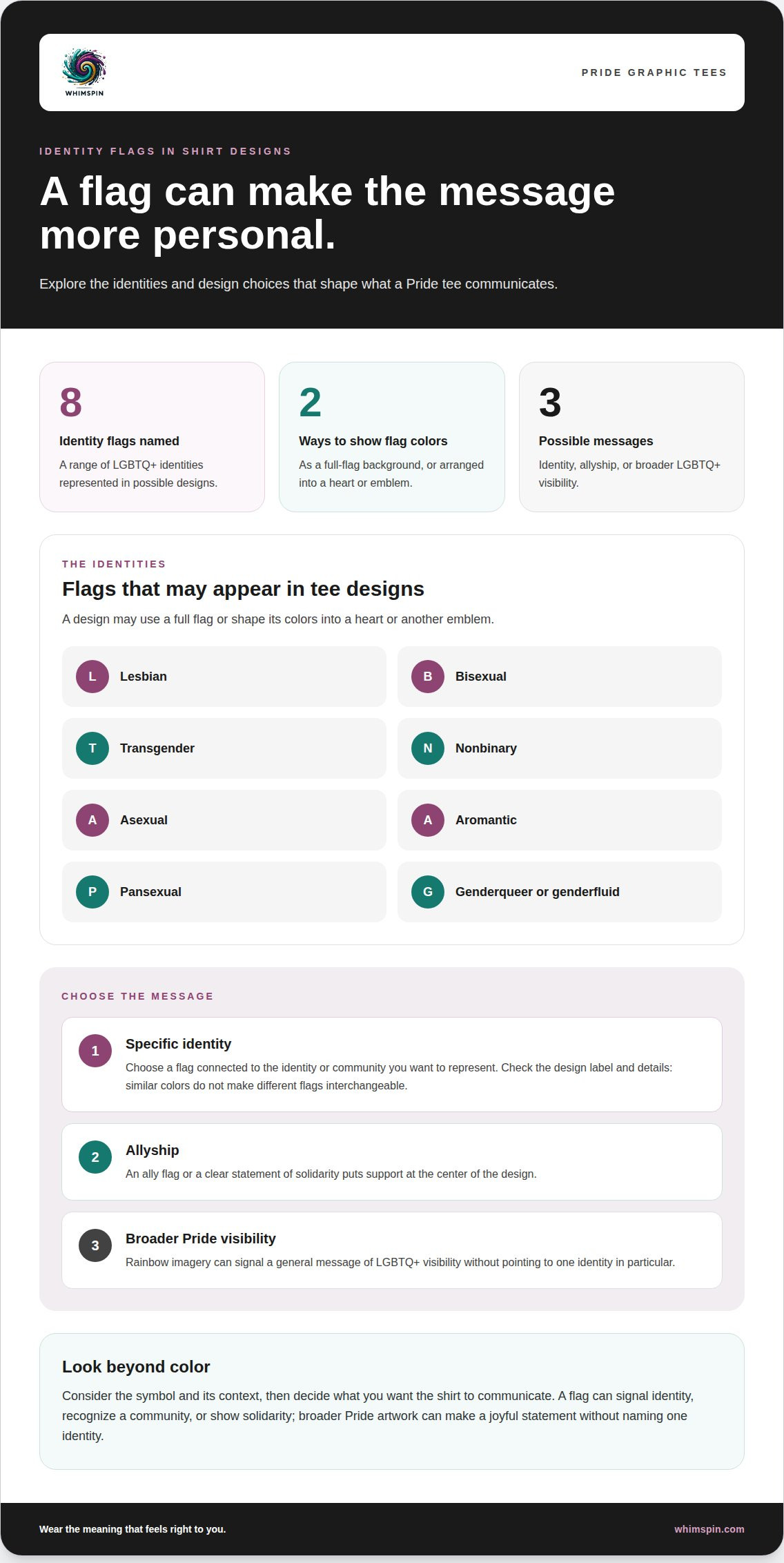
Designs may feature lesbian, bisexual, transgender, asexual, aromantic, pansexual, genderqueer, or genderfluid flags. Some use a full flag as the background; others arrange its colors into a heart or another emblem. Check the design’s label and visible details to make sure the symbol matches the identity you intend to represent. Similar colors don’t make different flags interchangeable.
Pride and Allyship Artwork
A Pride design can center a specific identity, while a rainbow motif often signals broader LGBTQ+ visibility. An ally design makes support its central message, through an ally flag or a clear statement of solidarity. Decide what you want the shirt to communicate. A flag connected to your own community and a design chosen to support someone else can both be meaningful, but they express different things.
Wearing Flag Designs
Make a full-flag graphic the focal point and keep other pieces simple so its colors stand out. A small heart emblem can fit comfortably under an open shirt or jacket. For a Pride march, pair a bold design with practical layers and shoes suited to walking. For everyday wear, jeans or a plain overshirt can balance a bright graphic without muting its message.
Design authorship matters, too. LGBTQ+-created artwork can reflect lived experience and community perspectives, but a flag alone doesn’t identify its creator. Look for artist attribution or a description that credits the designer instead of assuming someone’s identity from the artwork. Credit helps distinguish a creator’s stated perspective from a graphic that reproduces a familiar symbol.
Use these checks to choose thoughtfully:
- Match the flag: Identify whether the design represents lesbian, bisexual, trans, or another community.
- Read the message: Separate identity-centered artwork from broader Pride or allyship graphics.
- Consider the setting: Choose a bold print for a parade or a smaller emblem for regular outfits.
- Notice attribution: Look for clear artist credit when creator perspective matters to you.
A tee’s message can be personal, supportive, or celebratory. A transgender flag heart and a general rainbow graphic, for example, don’t make the same statement. Choose the design that says what you mean, then consider where and with whom you want to wear it.
Difference between flag T-shirts and other Pride T-shirts
A flag tee uses a specific identity flag as its main visual cue. Other Pride shirts may focus on a rainbow, a slogan, or celebratory artwork instead.
Compare a transgender flag heart with a shirt featuring a broad rainbow graphic. The heart connects the design to a particular identity; the rainbow can express wider Pride or solidarity. Neither carries the same message for every wearer. Colors, symbols, and words all shape what a graphic communicates, so consider the full design rather than relying on a single bright stripe.
Flag artwork makes its visual reference specific. A design might reproduce a flag’s stripes, arrange them inside a heart, or use them as a small emblem. By contrast, a shirt reading “Love is love” makes its point with words. A rainbow pattern can celebrate LGBTQ+ communities without naming one identity. These are different design approaches, not a ranking.
Other Pride artwork may use illustration, typography, or humor. A shirt with a rainbow and a short message can feel more conversational than a flag emblem. Stars, flowers, or bold lettering can make Pride part of a larger artistic composition. These elements affect the mood and readability: small text may be harder to read across a parade route, while a large symbol is easier to spot.
- Flag-centered: A bisexual flag heart foregrounds a specific flag’s colors.
- Rainbow-centered: A multicolor arc can signal broad Pride without naming one identity.
- Message-centered: A phrase such as “Queer joy” puts language first.
- Art-centered: A rainbow woven into a floral illustration makes the image the focus.
Use the design’s main feature to decide whether it suits your purpose. For a clear identity reference, look for flag colors or a recognizable flag emblem. For a broader celebration, a rainbow or Pride message may fit better. A small chest graphic creates a quieter look than a large front print; a larger graphic can be the centerpiece of a vivid event outfit.
Consider the audience and setting, too. At a Pride gathering, a bold message might invite conversation; at a casual lunch, a subtle emblem may better match your style. A flag design can be personal, supportive, or both, depending on who wears it. Choose based on the meaning you want to express, then consider its scale, wording, and visual style. A flag shirt foregrounds a particular symbol, while other Pride shirts may communicate through color, text, or art.
What should I know about quality, printing, and washing pride graphic tees?
A shirt’s fabric, seams, print, and care instructions all affect how it wears. Check each detail before choosing a tee, especially if you plan to wear it often. A clear graphic should have crisp edges and colors that are easy to distinguish. The fabric should feel comfortable against your skin, while seams should look even and secure. These observations help you assess a garment without assuming that one print method guarantees better quality.
Print clarity matters for flag designs. Look closely at stripe boundaries, small symbols, and text. In a bisexual flag heart, for example, the colors should remain visually distinct. Fine lines may need a closer look than a bold rainbow graphic. Also consider whether the image is centered and its size suits the shirt front. Those details affect how the design reads when worn.
Some pride-shirt listings display the OEKO-TEX STANDARD 100 designation. Treat that label as one piece of product information, not a substitute for checking fabric feel, stitching, and print clarity. A product description may also explain the garment material or printing approach. Read those details together, then compare them with what matters most to you, such as a soft feel, a specific visual style, or easy routine care.
For washing, follow the garment’s care label first. A cautious routine for a printed tee is to turn it inside out, use cold water, and choose a gentle cycle. This reduces direct rubbing against the design during washing. Wash similar colors together, especially when a bright rainbow graphic is new. Avoid placing an iron directly on printed artwork; if ironing is needed, protect the design with fabric and follow the care instructions.
Drying choices matter, too. Air-drying can help limit heat exposure, while high dryer heat may stress fabric and printed areas. If you use a dryer, follow the garment label rather than assuming every tee can handle the same setting. Remove the shirt promptly to avoid leaving it crumpled around other laundry. For a stubborn mark, treat the fabric gently instead of scrubbing across the design.
- Inspect: Check seams, fabric feel, graphic alignment, and color separation.
- Read: Use the care label and product details as your practical guide.
- Wash: Turn the shirt inside out and use a gentle, cool wash routine.
- Dry: Limit direct heat and protect the printed area from ironing.
Thoughtful care keeps a favorite design ready for another parade, meetup, or everyday outfit. Follow the garment’s instructions: machine wash tees in cold water and tumble dry on low.
Make Your Next Pride Shirt Feel Like You
Your outfit can carry a message without becoming a uniform. Choose a design that feels right for the moment, whether you’re heading to a community event, meeting friends, or dressing for yourself. The meaning can be unmistakably personal or openly celebratory. Pride flag graphic tees bring identity and style together in an everyday choice.
Give yourself room to change your mind, too. A flag that feels meaningful now can sit alongside other designs in your wardrobe, each expressing a different part of your personality. Let color, artwork, and fit work together instead of asking one shirt to say everything. Your style can be thoughtful, playful, bold, or all three before breakfast.
Ready to explore a Pride tee? Take your time, choose a design that feels like yours, and wear it with confidence. Let your outfit make its own joyful noise.
Contact WhimSpin about Pride tees
Show up as yourself. That’s always a look worth wearing.
Frequently Asked Questions
Which pride flags are featured on Whimspin graphic tees?
Designs include the lesbian , intersex , bisexual , pansexual , gay men’s , transgender , genderneutral , nonbinary , asexual , aromantic , genderfluid , genderqueer , neutrois , and aroace flags color patterns. Rainbow Pride and ally designs offer broader messages. If you’re choosing a tee as a gift, identify the flag or message first instead of relying on color alone.
What materials and size options are available for pride graphic tees?
Adult graphic tees are offered in sizes XS through 5XL, and most use unisex sizing. Material can vary by garment, so use the details for the specific tee you’re considering rather than assuming every shirt feels the same. All-over print shirts have a separate size range, XS through 2XL. For a Pride flag design, consider both the shirt type and its listed size range.
How do I choose the right fit and size for a pride tee?
Use the sizing information for the specific shirt, since cut and garment type affect fit. First, decide whether you want room for layering, such as wearing a tee over a long-sleeved top, or a closer silhouette under a jacket. Then choose a size that suits your preference. If you’re buying a gift, ask the wearer about their usual fit rather than guessing from appearance.
Are pride flag graphic tees available in plus sizes and gender-neutral fits?
Adult tees range from XS through 5XL, with styles using unisex sizing. That range gives shoppers options across a broad span of sizes, while a unisex label avoids separating most tees into men’s and women’s categories. Check the individual product’s size information and cut before choosing, especially if you prefer a particular silhouette or are shopping for someone else.

